Herb Farms Reimagined: AI's Arrival
Commercial herb growing has long been labor-intensive. Traditional methods involve manual planting, weeding, harvesting, and environmental monitoring. Rising labor costs, unpredictable weather, and pests pressure these methods, leading to fluctuating yields that make meeting market demand difficult.
Incremental improvements like better irrigation and fertilizer formulations were the main progress avenues. Now, artificial intelligence is emerging. AI gives farmers tools for informed decisions, resource optimization, and increased efficiency and profitability, shifting management from reactive to proactive prediction.
Data collection with drones and sensors isn't new, but intelligent analysis is the real change. AI algorithms sift through soil conditions, weather forecasts, and plant health metrics to find patterns humans miss, leading to more precise and responsive growing.
Early adoption spans familiar herbs like basil and mint to specialized medicinal varieties. Understanding how these technologies work and integrate into farm operations is necessary. This is a fundamental change in commercial herb growing.
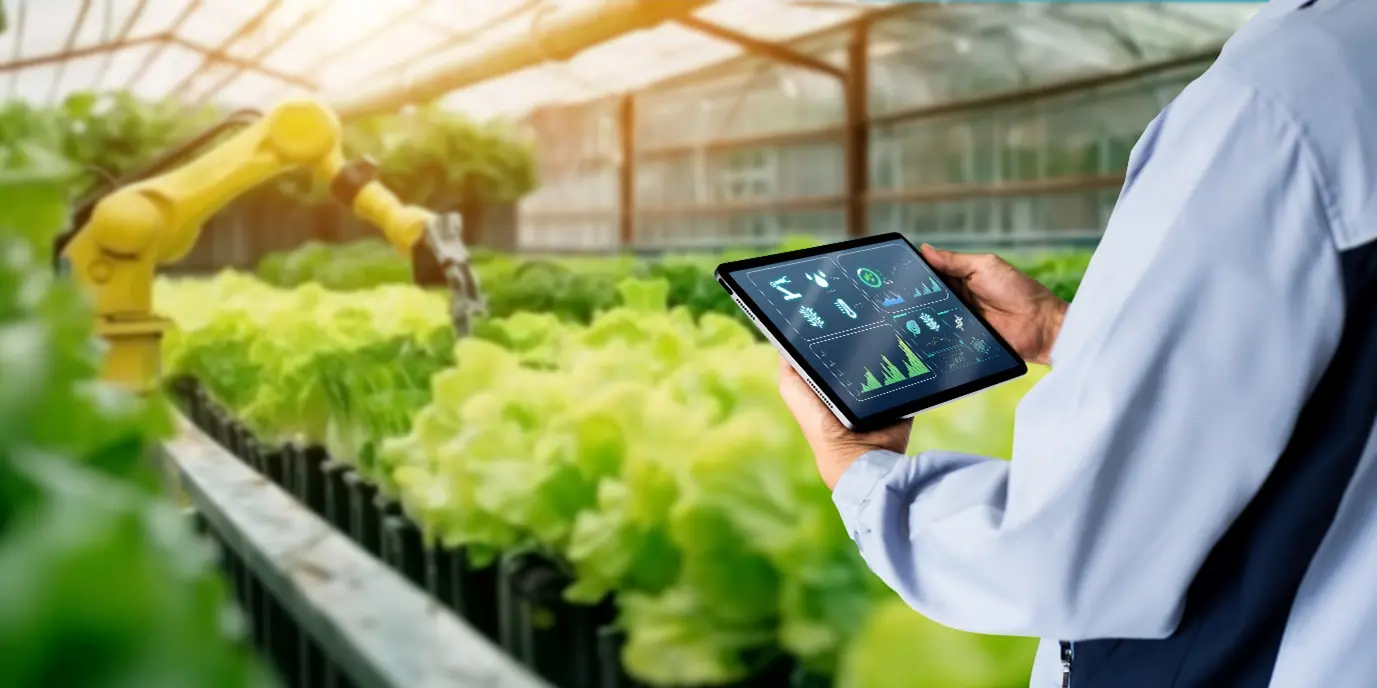
Sensor Networks & Real-Time Monitoring
Data collection for AI-powered herb farming starts with sensors. Modern sensors measure plant health and growth parameters, unlike simple thermometers. Soil moisture sensors provide real-time water content data at different depths, allowing precise irrigation scheduling.
Sensors also monitor nutrient levels (nitrogen, phosphorus, potassium, micronutrients), light intensity, temperature, and humidity, all critical for herb growth and quality. This continuous data stream provides a comprehensive view of the growing environment. For basil, light levels are key to volatile oil production, affecting flavor and aroma.
The Internet of Things (IoT) connects sensors wirelessly, transmitting data to a central hub or cloud platform. Farmers can access this information remotely via smartphones or computers, eliminating manual field checks. Sensors can alert growers to potential waterlogging, important for rosemary which needs well-drained soil.
Mint's aggressive growth requires careful nutrient management. Sensors track nutrient uptake, preventing deficiencies or excesses that impact yield and flavor. Sensor network costs are decreasing rapidly, making them accessible to smaller farms. A basic system for a few acres can cost under $5,000, depending on sensor choice.
- Soil Moisture Sensors: Monitor water content at various depths.
- Nutrient Sensors: Track nitrogen, phosphorus, potassium, and micronutrient levels.
- Light Intensity Sensors: Measure light exposure for optimal photosynthesis.
- Temperature & Humidity Sensors: Provide data on environmental conditions.
AI-Driven Irrigation & Nutrient Delivery
Analyzing data and using insights for informed decisions is the real power. AI algorithms identify patterns and predict plant needs accurately, which is valuable for irrigation and nutrient delivery. Variable Rate Irrigation (VRI) applies water only where and when needed.
Traditional irrigation applies uniform water, causing waste and potential root rot. VRI, guided by AI analysis of sensor data, adjusts water application rates based on localized needs, significantly reducing consumption, especially in water-scarce areas. NC State Extension resources on medicinal herb cultivation stress efficient water management for maximizing yields and quality.
AI predicts plant needs based on growth stage and environmental conditions. For example, an algorithm might predict basil needing more nitrogen during rapid growth, or rosemary benefiting from potassium during flowering. This allows proactive nutrient delivery, ensuring plants get the right nutrients at the right time.
Benefits extend beyond resource efficiency. Minimizing fertilizer use with AI-driven delivery reduces environmental impact, preventing runoff and protecting water quality. This is important as consumers demand sustainable practices. Cost savings from reduced water and fertilizer use can offset AI technology investment.
Pest & Disease Prediction with Machine Learning
Preventative measures are crucial in herb farming, and AI predicts and mitigates pest and disease outbreaks. Instead of reacting to problems, farmers use machine learning models to identify potential threats before they spread. This maintains crop health and minimizes losses.
Image recognition technology is key. Cameras on drones or in fields capture plant leaf images. AI algorithms analyze these images for early disease signs like subtle discoloration or lesions, which the human eye might miss. This allows early intervention and prevents infection spread.
Machine learning models predict outbreaks using weather patterns and historical data. For example, an algorithm might predict increased fungal disease risk after heavy rainfall, as these diseases thrive in humid conditions. The FDA provides fresh herb safety guidelines including preventative measures against microbial contamination and pest infestations.
Prediction accuracy improves with more data and refined algorithms. While not perfect, it reduces reliance on broad-spectrum pesticides and fungicides, promoting sustainable pest and disease management. Early detection also means less crop loss and increased profitability.
Automated Harvesting & Sorting
Harvesting is one of the most labor-intensive tasks in herb farming. Robotic harvesting systems aim to automate this process and reduce labor costs. Automating herb harvesting is challenging due to the delicate nature of herbs and their varying growth patterns, making it difficult for robots to pick ripe specimens without damage.
Current robotic systems use computer vision and AI to identify ripe herbs by color, size, and shape. Gentle grippers pluck herbs without bruising. These systems are still developing but show promise for speed and efficiency.
AI also sorts herbs by quality and size. Computer vision systems analyze herb appearance, identifying blemishes or imperfections. Herbs are then automatically graded and sorted into categories, ensuring only the highest quality product reaches the market.
The cost of automated systems is a significant barrier for many herb farmers. A fully automated harvesting and sorting system can cost over $100,000. As technology matures and production increases, prices are expected to decrease, making it more accessible.
Data Analytics: Optimizing Yield & Quality
undefined tasks; it’s also about providing farmers with the insights they need to optimize their overall operations. Data analytics platforms collect and analyze data from all aspects of the herb farming process – soil conditions, weather patterns, plant health, harvest yields, and market prices – to identify trends and opportunities for improvement.
These platforms typically feature dashboards and reporting tools that allow farmers to visualize their data and track key performance indicators (KPIs). For example, a farmer might use a dashboard to monitor the yield of different herb varieties, identify areas of the field that are underperforming, or track the impact of different fertilizer treatments.
AI can also help identify the most profitable herb varieties. By analyzing market data and predicting future demand, farmers can make informed decisions about which herbs to grow and how much to plant. This can significantly increase revenue and reduce waste. Data privacy and security are paramount; farmers need to ensure that their data is protected from unauthorized access.
The value of data analytics extends beyond the farm gate. By sharing data with researchers and other growers, farmers can contribute to a collective knowledge base that benefits the entire industry. This collaborative approach is essential for driving innovation and improving the sustainability of herb farming.
Data Analytics Platform Comparison for Herb Farms (2026)
| Platform | Ease of Use | Data Visualization | Sensor Integration | Customer Support |
|---|---|---|---|---|
| AgriMetrics | Moderate - Requires some data science expertise | Strong - Customizable dashboards and reporting | Good - Supports common agricultural sensors | Standard - Email and phone support |
| CropWise | High - User-friendly interface, minimal training needed | Good - Pre-built visualizations focused on yield prediction | Moderate - Limited to specific sensor brands | Responsive - Online chat and knowledge base |
| FarmAI | Moderate - Steep learning curve for advanced features | Excellent - Advanced analytics and predictive modeling | Excellent - Open API for integration with a wide range of sensors | Premium - Dedicated account manager available |
| GreenTech Insights | High - Intuitive drag-and-drop interface | Moderate - Focus on basic charting and trend analysis | Moderate - Requires custom development for complex sensor networks | Basic - Limited documentation and community forum |
| HerbData Pro | Moderate - Tailored for herb-specific data, some familiarity with data analysis helpful | Good - Specialized visualizations for herb quality metrics | Good - Designed for integration with environmental control systems | Good - Dedicated support for herb growers |
Qualitative comparison based on the article research brief. Confirm current product details in the official docs before making implementation choices.
Business Models & Scaling AI Integration
Integrating AI into an herb farming business doesn't have to be an all-or-nothing proposition. There are several different approaches, ranging from starting small with a few sensors to investing in a fully automated system. The best approach will depend on the size of the farm, the available budget, and the specific goals of the operation.
One option is to start small by deploying a network of sensors to monitor key environmental parameters. This provides valuable data that can be used to improve irrigation and nutrient management. Another option is to partner with AI technology providers who offer services such as data analytics and pest/disease prediction. Chestnut Herbs highlights several business ideas for herbal entrepreneurs, including starting small with a single plant and scaling up from there.
For larger farms with more resources, investing in a fully automated system – including robotic harvesting and sorting – may be a viable option. However, this requires a significant upfront investment and a willingness to embrace new technologies. A growing business model is 'AI-as-a-service', where farms offer their data analysis capabilities to other growers.
Another emerging business model is data analytics consulting. Herb farms with expertise in AI and data analysis can offer their services to other growers, helping them to optimize their operations and improve their profitability. This creates a new revenue stream and fosters collaboration within the industry.
The Future of AI in Herb Production
The future of AI in herb production is bright, with the potential for even more transformative innovations on the horizon. One exciting area of research is the use of AI to develop new herb varieties with improved traits – such as disease resistance, higher yields, and enhanced flavor profiles. AI algorithms can analyze genetic data and identify promising breeding candidates.
Another area of focus is the creation of more sustainable and resilient herb farming systems. AI can help optimize resource use, reduce environmental impact, and adapt to changing climate conditions. This is particularly important in light of the growing demand for organic and sustainably produced herbs.
We might see the rise of fully autonomous herb farms, where robots handle all aspects of the growing process, from planting and weeding to harvesting and sorting. These farms could be located in urban areas, reducing transportation costs and providing fresh herbs to local markets.
However, there are also uncertainties and challenges that lie ahead. The cost of AI technology remains a barrier to entry for many farmers, and the need for skilled personnel to operate and maintain these systems is growing. Furthermore, ethical considerations around data privacy and algorithmic bias must be addressed. Despite these challenges, the potential benefits of AI in herb production are too significant to ignore.
What is the biggest barrier to adopting AI in your herb farming operation?
As smart technology continues to reshape commercial herb growing, we want to hear from you. What is holding you back from integrating AI-powered tools into your herb business? Vote below and share your experience in the comments!
No comments yet. Be the first to share your thoughts!