
The shift toward tech-heavy herb crops
Herb growers are moving away from manual labor as demand for culinary and medicinal plants climbs. The University of Idaho's 2023 market report shows that producers who adopt tech early are capturing higher margins by hitting the strict quality specs required by supplement and cosmetic brands.
This isn’t just about increasing volume; it’s about quality and traceability. Standards like Good Agricultural and Collection Practice (GACP), as outlined by the American Herbal Pharmacopoeia (AHPA), are becoming essential for demonstrating product integrity and meeting regulatory requirements. Technology plays a key role in achieving GACP compliance by providing detailed records of cultivation practices and ensuring consistent product quality.
We’re seeing a move away from traditional, labor-intensive methods towards data-driven, automated systems. This shift isn’t simply a matter of adopting the latest gadgets. It requires a fundamental rethinking of how herb farms operate, integrating technology into every stage of the growing process, from planting to harvesting and beyond. The next few years will be defined by those who embrace this change.
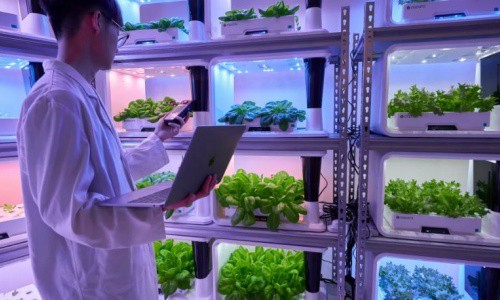
Automated irrigation and fertigation
Water management is paramount in any agricultural setting, and herb farming is no exception. Automated irrigation systems, particularly drip irrigation and micro-sprinklers, are becoming increasingly common. These systems deliver water directly to the plant roots, minimizing water waste and reducing the risk of fungal diseases. Precise control over water delivery is especially important for herbs, many of which are sensitive to overwatering.
Beyond simply delivering water, modern systems now incorporate nutrient delivery – often called fertigation. Sensors embedded in the soil continuously monitor moisture levels, pH, and nutrient concentrations. This data is used to automatically adjust the mix of water and nutrients delivered to each plant, ensuring optimal growth conditions. This level of precision is difficult, if not impossible, to achieve with manual methods.
Most modern controllers sync to your phone. If a pump fails or a sensor detects a pH spike at 2:00 AM, you get an alert immediately. For a five-acre basil farm, catching a dry cycle three hours early saves thousands in wilted inventory. The hardware usually pays for itself in water savings alone within two seasons.
Climate tech for modern greenhouses
Greenhouses remain a cornerstone of commercial herb growing, providing a controlled environment that extends the growing season and protects crops from harsh weather. However, modern greenhouses are far more sophisticated than those of the past. Automated ventilation, heating, and cooling systems maintain optimal temperatures and humidity levels, maximizing plant growth.
Sensors play a critical role in these systems, continuously monitoring temperature, humidity, light levels, and carbon dioxide concentration. This data is used to automatically adjust the greenhouse environment, ensuring that plants receive the ideal conditions for growth. Shading systems and supplemental lighting, particularly LEDs, further optimize light exposure, even during periods of low sunlight.
Energy efficiency is a major focus in greenhouse design. Modern greenhouses often incorporate features such as double-layered glazing, thermal screens, and energy-efficient heating and cooling systems. These technologies reduce energy consumption and minimize the environmental impact of herb farming. The ability to precisely control the climate allows for consistent production year-round, a significant advantage in competitive markets.
Greenhouse Covering Materials Comparison for Herb Production
| Material | Initial Cost | Durability | Light Transmission | Insulation Value |
|---|---|---|---|---|
| Polyethylene Film | Lower | Least Durable | Good | Lower |
| Polycarbonate Panels | Moderate | More Durable | Very Good | Better for maintaining consistent temperatures |
| Glass | Higher | Most Durable | Excellent | Best insulation, but fragile |
| Polyethylene Film (Multi-Layer) | Moderate | Improved Durability | Good | Better than single-layer polyethylene |
| Polycarbonate (Twin-Wall) | Moderate to Higher | Very Durable | Good | Superior insulation compared to single-wall polycarbonate |
| Glass (Tempered) | Higher | Durable | Excellent | Improved safety compared to standard glass |
| Polyethylene Film (Infrared Blocking) | Moderate | Least Durable | Good | Better for temperature control, reducing heat loss |
Qualitative comparison based on the article research brief. Confirm current product details in the official docs before making implementation choices.
Robots for weeding and harvest
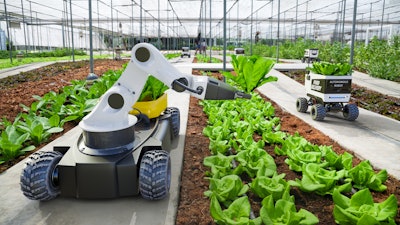
Agricultural robotics is a rapidly developing field with the potential to revolutionize herb farming. Robots are being developed to automate tasks such as harvesting and weeding, which are traditionally labor-intensive. However, harvesting herbs presents unique challenges. Unlike many crops, herbs are often delicate and require careful handling to avoid damage.
Current robotic harvesting systems are still limited in their ability to handle a wide variety of herb species and growth stages. Identifying and selectively harvesting different herb varieties requires sophisticated computer vision and machine learning algorithms. The robots need to distinguish between the target herb and surrounding weeds or other plants.
Despite these challenges, significant progress is being made. Automated weeding robots are already commercially available and can significantly reduce the need for manual weeding. While fully autonomous harvesting robots are still a few years away, the potential benefits – reduced labor costs, increased harvesting efficiency, and improved product quality – are substantial. Expect to see more advanced robotic solutions emerge in the coming years.
Data Analytics & Farm Management Software
The data generated by sensors and automated systems is only valuable if it’s analyzed and used to inform decision-making. Data analytics tools and farm management software are becoming essential for herb farmers. These tools collect data on soil conditions, plant health, environmental factors, and yield performance.
Farm management software integrates this data to provide insights into crop performance, optimize resource allocation, and predict yields. Farmers can use this information to identify areas for improvement, adjust growing practices, and maximize profitability. For instance, analyzing historical data can help predict optimal planting times and fertilizer application rates.
Traceability and record-keeping are also crucial, particularly for GACP compliance. Farm management software provides a centralized platform for documenting all aspects of the growing process, from seed selection to harvesting and processing. This detailed record-keeping helps demonstrate product quality and ensures compliance with regulatory requirements. Knowing where everything came from, and what happened to it, is increasingly important.
Smart Herb Farm Tools
- Soil Moisture Sensors - Accurate, real-time data on soil hydration levels optimizes irrigation, reducing water waste and preventing root rot. Options include the Vegetronix VH400 and Watermark Soil Moisture Sensors.
- Soil pH Meters - Maintaining optimal soil pH is crucial for nutrient absorption. Digital pH meters, like those from Apera Instruments, provide precise readings for informed soil amendment decisions.
- Wireless Weather Stations - Comprehensive monitoring of air temperature and humidity is vital for pest and disease management, and for creating ideal growing conditions. Davis Instruments Vantage Vue is a popular choice.
- Plant Growth Monitoring Systems - Tools like the PlantTape system offer a method to track plant development and spacing, aiding in yield prediction and harvest planning. They focus on consistent seed spacing and early growth monitoring.
- Data Loggers - Devices like those from HOBO by Onset allow for continuous recording of environmental data (temperature, humidity, light levels) over extended periods, providing a historical record for analysis and optimization.
- Automated Irrigation Systems - Rain Bird and Netafim offer drip irrigation and micro-sprinkler systems that can be integrated with soil moisture sensors for precise water delivery, minimizing labor and maximizing efficiency.
- Spectral Sensors/Cameras - Tools from companies like MicaSense can assess plant health based on light reflectance, identifying stress or nutrient deficiencies before they become visible to the naked eye. This is often used with drone technology.
Precision Planting & Seedling Automation
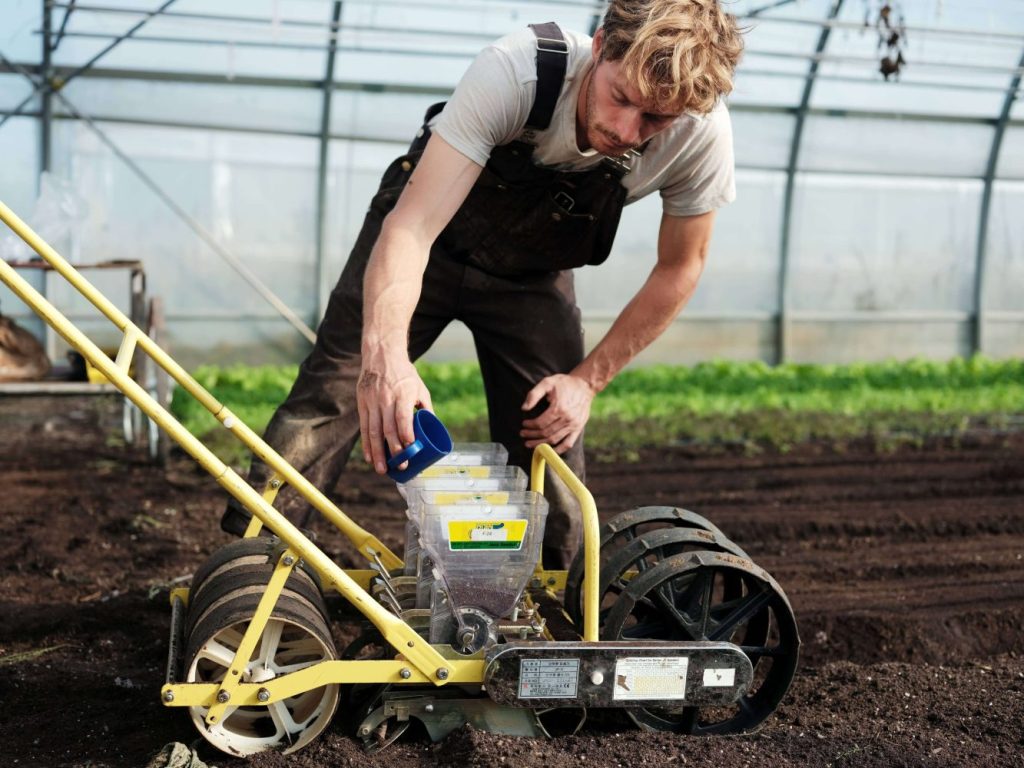
Optimizing the planting process can significantly impact yield and quality. Automated seeders and transplanting machines ensure precise seed spacing and consistent planting depth, improving germination rates and promoting uniform plant growth. This is a step up from manual seeding, which can be prone to inconsistencies.
Seedling automation technologies further streamline the process. Automated watering and fertilization systems for seed trays ensure that seedlings receive the optimal conditions for early development. Environmental controls within the seed starting environment are also becoming more sophisticated, controlling temperature and humidity.
The benefits are clear: reduced manual labor, improved seedling quality, and increased efficiency. A consistent start translates to stronger, more productive plants throughout the growing cycle. While the initial investment can be significant, the long-term returns can be substantial.
Drones for Crop Monitoring & Spraying
Drones are increasingly being used in agriculture for a variety of tasks, and herb farming is no exception. Drones equipped with high-resolution cameras can provide aerial images of crops, allowing farmers to quickly assess plant health and identify areas of stress or disease. This early detection can prevent widespread problems and minimize yield losses.
Drones can also be used for targeted spraying of pesticides or fertilizers. This allows farmers to apply treatments only where they are needed, reducing chemical usage and minimizing environmental impact. However, it’s important to be aware of the regulatory considerations for drone operation, which vary by location.
The ability to quickly and efficiently survey large areas of land is a major advantage. Drones can cover ground much faster than a farmer walking through a field, providing a comprehensive overview of crop health. This technology is becoming more affordable and accessible, making it a viable option for herb farms of all sizes.
Are you currently using drones on your herb farm, or planning to in the next 3 years?
Vote below!
Top equipment picks for 2026
I've narrowed down the current market to five tools that actually justify their price tag through labor savings or yield bumps.
First, the Argus Control System ($8,000 - $25,000 depending on greenhouse size) provides comprehensive climate control for greenhouses, offering precise temperature, humidity, and ventilation management. Its remote monitoring capabilities are a major plus. Next, the FarmBot Genesis ($3,995) is a small-scale robotic weeding and planting system, ideal for smaller herb farms looking to automate labor-intensive tasks. It’s still evolving, but shows great promise.
For irrigation, the Netafim NetBow system ($1,500 - $5,000 per acre) offers exceptional water efficiency and uniform coverage, crucial for herbs sensitive to overwatering. The Sentera AGX7 drone ($12,000 - $18,000) provides high-resolution multispectral imagery for crop health monitoring, enabling early detection of pests and diseases. Finally, Agriware Farm Management Software ($500 - $2,000 per year, subscription based) integrates data from various sources, providing valuable insights into crop performance and resource allocation. These tools, when implemented strategically, can significantly boost productivity and profits.
No comments yet. Be the first to share your thoughts!