
The shift to high-tech herb farming
Herb farming is traditionally back-breaking work. We've spent decades planting, weeding, and drying by hand. That doesn't work anymore. Demand for culinary and medicinal herbs is climbing so fast that manual labor can't keep up. A 2021 report from the University of Idaho suggests the sheer variety of herbal products—from essential oils to kitchen staples—now requires a level of output that old-school methods can't reach.
Historically, small-scale herb farms have operated successfully with minimal technology. However, to remain competitive and meet increasing consumer demand, even these operations are beginning to adopt new tools. Larger, commercial herb growing operations are leading the charge, investing in automation and data-driven technologies to maximize yields and reduce costs.
This isn’t simply about replacing human labor with machines. It's about improving the quality of the herbs, optimizing resource use, and ensuring consistent production. The shift towards technology in herb farming is a response to market pressures and a recognition that traditional methods may not be sustainable in the long run. It's about making herb farming a more robust and profitable business.
Automated watering and nutrients
Water management is critical in any agricultural operation, and herb farming is no exception. Automated irrigation systems, such as drip irrigation and micro-sprinklers, offer a significant advantage over traditional methods by delivering water directly to the plant roots, minimizing water waste and reducing the risk of fungal diseases. Precision is the key here; applying water only when and where it’s needed.
These systems are often integrated with sensors that monitor soil moisture levels, temperature, and even plant health. This data allows the system to adjust watering schedules automatically, ensuring that herbs receive the optimal amount of hydration. The benefits extend beyond water conservation. Consistent moisture levels promote even growth and can improve the overall quality of the herb.
Fertigation—mixing nutrients directly into the water line—is a game changer for medicinal crops. The American Herbal Pharmacopoeia’s GACP guidelines are clear: if you want potent, safe raw materials, you need total control over what the plant eats. I've found that automated delivery prevents the 'feast or famine' cycle that happens with manual fertilizing.
Implementing these systems requires an initial investment, but the long-term benefits – reduced water bills, increased yields, and improved herb quality – can quickly offset the costs. The ability to fine-tune nutrient levels also reduces the risk of over-fertilization, which can harm plants and the environment.
Greenhouse climate controls
For many herb growers, particularly those in regions with harsh climates, greenhouses are essential for year-round production. Modern greenhouse climate control systems go far beyond simply providing shelter from the elements. They offer precise control over temperature, humidity, ventilation, and light levels.
Automated systems use sensors to monitor these factors and adjust heating, cooling, and ventilation accordingly. Different types of greenhouse coverings – polyethylene film, polycarbonate panels, and glass – have varying levels of light transmission and insulation. Selecting the right covering is crucial for optimizing plant growth.
Shading systems are used to reduce light intensity during the hottest months, preventing heat stress and protecting delicate herbs. Supplemental lighting, using LED or high-pressure sodium lamps, can extend the growing season and ensure consistent production during the winter months. The ability to create an ideal growing environment allows herb farmers to produce high-quality herbs regardless of external weather conditions.
Proper climate control isn't just about maximizing yield; it's about controlling the chemical composition of the herbs themselves. Factors like light intensity and temperature can influence the concentration of essential oils and other beneficial compounds.
Robots for weeding and harvest
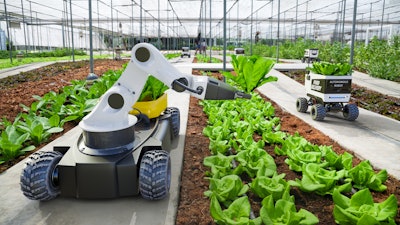
Agricultural robotics is a rapidly developing field, and its potential impact on herb farming is significant. Robots are being designed to automate tasks that are traditionally labor-intensive, such as harvesting and weeding. While fully autonomous robots are still relatively expensive and complex, the technology is improving rapidly.
The challenge with herb harvesting is the delicate nature of the plants. Herbs often have fragile stems and leaves, requiring a gentle touch. Robots designed for herb harvesting are equipped with sophisticated sensors and grippers to minimize damage. Weeding robots use cameras and artificial intelligence to identify and remove weeds without harming the herbs.
Currently, certain herbs are more suitable for robotic harvesting than others. Herbs with larger, more robust leaves and stems, like basil and mint, are easier for robots to handle. Smaller, more delicate herbs, like dill and chervil, present a greater challenge. As technology advances, we can expect to see robots capable of harvesting a wider range of herbs.
The primary benefit of robotic harvesting and weeding is labor savings. In areas where labor costs are high, robots can provide a significant return on investment. They also offer the potential for increased efficiency and reduced crop loss.
Software and data
Data is becoming increasingly important in modern agriculture. Herb farmers can use sensors to collect data on a wide range of factors, including soil conditions, plant health, environmental conditions, and yield. This data can then be analyzed to identify trends, optimize resource allocation, and improve overall farm management.
Farm management software integrates data from various sources, providing growers with a comprehensive view of their operation. These tools can help with yield prediction, pest and disease management, irrigation scheduling, and nutrient management. They can also track inventory, manage finances, and generate reports.
However, data is only useful if you know how to interpret it. Herb farmers need to understand the underlying principles of plant physiology and agronomy to make informed decisions based on the data. Simply collecting data is not enough; you need to use it to drive meaningful improvements.
The cost of farm management software varies depending on the features and functionality. Some software packages are designed for small-scale farms, while others are geared towards larger, commercial operations. It’s important to choose a system that meets your specific needs and budget.
Drones for monitoring and spraying
Drones are becoming increasingly popular in agriculture, offering a cost-effective way to monitor crop health and apply pesticides and fertilizers. Drones equipped with high-resolution cameras can capture detailed images of herb fields, allowing growers to identify areas of stress, detect pests and diseases, and assess overall plant health.
This information can be used to make targeted interventions, such as applying pesticides or fertilizers only to the affected areas. This minimizes waste and reduces the environmental impact of agricultural chemicals. Drones can also be used to create detailed maps of herb fields, which can be helpful for irrigation planning and other management tasks.
You can't just fly a spraying drone wherever you want. In the US, the FAA and local agricultural departments require specific licenses for chemical application from the air. Check your local 2024 regulations before you spend $15,000 on a rig you might not be allowed to fly.
While drones offer many benefits, they are not a replacement for traditional scouting methods. It’s still important to physically inspect herb plants to confirm the presence of pests and diseases and assess their severity.
Drone Features for Herb Farm Monitoring
- High-Resolution Cameras - Drones equipped with cameras offering at least 20 megapixels allow for detailed plant health assessments and early detection of issues like nutrient deficiencies or pest infestations.
- Extended Flight Time - Look for drones offering 30+ minutes of flight time per battery charge to efficiently cover larger herb farm areas without frequent landings for battery swaps.
- Precise GPS Accuracy - Drones with RTK (Real-Time Kinematic) GPS capabilities, achieving centimeter-level accuracy, are crucial for creating accurate orthomosaic maps and precise application of treatments.
- Obstacle Avoidance Systems - Multi-directional obstacle avoidance, utilizing sensors like ultrasonic or vision systems, minimizes the risk of damage to crops and the drone itself during automated flights.
- Data Processing Software Compatibility - Ensure the drone’s captured imagery is compatible with popular agricultural data processing software like Pix4Dmapper or DroneDeploy for generating actionable insights.
- Multispectral Imaging Capabilities - Drones with multispectral sensors can capture data beyond the visible spectrum, revealing plant stress and health indicators not visible to the naked eye, aiding in targeted interventions.
- Automated Flight Planning - Software allowing pre-programmed flight paths and autonomous operation is essential for efficient and repeatable data collection across your herb farm.
Specific tools to consider
For smaller herb farms looking to invest in technology, several pieces of equipment stand out as particularly promising. The Growlink system offers a relatively affordable and user-friendly solution for automating irrigation and nutrient delivery. It’s a good starting point for growers who are new to precision agriculture.
Another option is the Vegetronix VH400 soil moisture sensor, which provides accurate and reliable readings of soil moisture levels. This sensor can be integrated with automated irrigation systems to optimize water use. It's a relatively low-cost investment that can yield significant returns.
When it comes to climate control, the Argus Control System is a popular choice among greenhouse growers. It offers a comprehensive suite of features for managing temperature, humidity, ventilation, and light. While it’s more expensive than some other options, it provides a high level of control and precision.
Finally, for data collection and analysis, the FarmLogs platform is a user-friendly option for smaller farms. It allows growers to track yields, manage expenses, and generate reports. There's a free version available, and paid subscriptions unlock more advanced features. These tools represent a good balance of affordability, ease of use, and functionality for herb farmers looking to embrace technology.
No comments yet. Be the first to share your thoughts!